In this story ▾
- Chinatown geography: Mott, Bayard, Pell, Doyers, and East Broadway
- Chinatown restaurants: the Saturday brunch register
- Little Italy: Mulberry Street's contracted heritage
- The Lower East Side overlap: Orchard, Allen, Eldridge, and East Broadway
- Where to shop: southeast-Manhattan licensed-retail file
- Transit: J/Z, 6, B/D, F, and N/Q/R/W
- Cultural-context note: the cannabis-and-Chinatown reality
- Compliance: sidewalk, restaurant, and private residence
- A Chinatown-Little Italy Saturday template
- FAQ
# Chinatown, Little Italy, and the Lower East Side Overlap: A Southeast-Manhattan Guide for Adults 21+
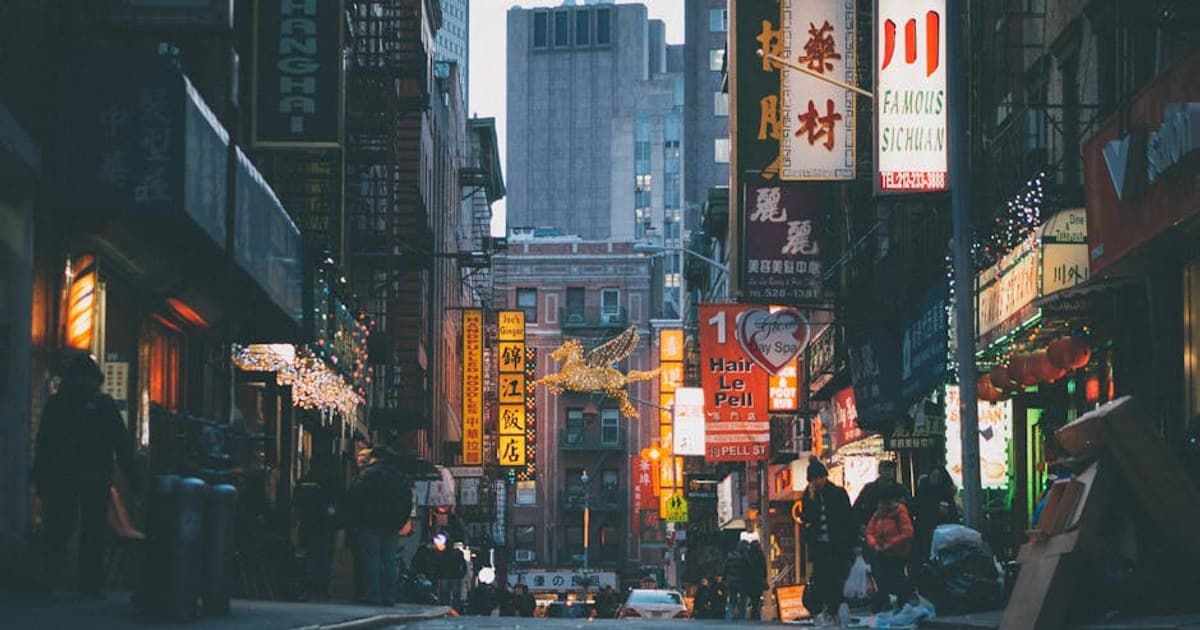
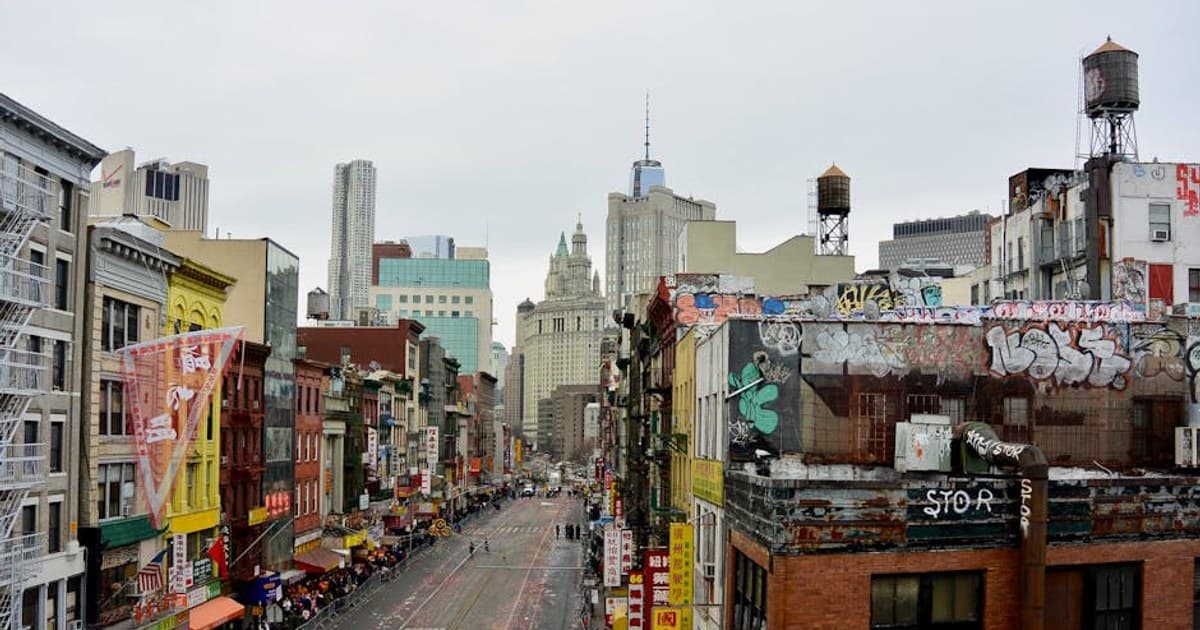
Below Canal Street, three neighborhoods press against each other in a way that makes the map look simpler than the walk. Chinatown spreads south and east from Canal, anchored by Mott, Bayard, Pell, Doyers, and East Broadway. Little Italy has contracted to a handful of blocks on Mulberry. The Lower East Side picks up on the east side of the Bowery and runs toward the river. The triangle these three form is some of the densest food geography in Manhattan, and for adults 21+ it rewards a slow, food-first approach.
This guide assumes the reader is over 21 and curious about pacing a Saturday around dim sum, Cantonese seafood, and an espresso on Mulberry. New York legalized adult-use cannabis in 2021. New York state law prohibits cannabis consumption on state-owned land and in public spaces. That sets the frame: the licensed shops are an errand, the sidewalks are public, and the southeast-Manhattan day is about the food and the walk.
Chinatown geography: Mott, Bayard, Pell, Doyers, and East Broadway
Chinatown's main spines run north-south from Canal down to East Broadway and the approach to the Manhattan Bridge. Mott Street is the central commercial vein, lined with bakeries, herbalists, and old-school Cantonese rooms that have been operating since the mid-20th century. Bayard runs east-west and carries some of the neighborhood's most concentrated noodle and dumpling traffic. Pell and Doyers, the curving lanes north of Bayard, hold an outsized share of Chinatown's oldest restaurants and tea parlors. East Broadway, on the southern edge, leans toward Fujianese cooking and a newer wave of Bangkok-influenced and Vietnamese rooms.
The food culture isn't monolithic. Cantonese dim sum and seafood remain the backbone. Newer Sichuan, Northern Chinese, and hand-pulled noodle spots have moved in over the last decade, particularly along Forsyth and Eldridge. Vietnamese pho and bún rooms cluster along East Broadway and the southern blocks. The neighborhood rewards a day on foot precisely because it isn't a single experience: it's a walking grid where the meal can shift from steamed dumplings at noon to clay-pot rice at 5 PM without changing trains.
Chinatown restaurants: the Saturday brunch register
The pacing for a Chinatown food day is simple: eat first, walk second. Specific anchors that reward this approach:
- Nom Wah Tea Parlor, 13 Doyers Street. The oldest dim sum parlor in Chinatown, operating since 1920. The room is small, the order sheet is paper, and the shrimp dumplings, roast pork buns, and turnip cake are the reason the line forms before 11 AM. Saturday brunch register, sit-down only.
- Joe's Shanghai, on Pell Street. Known for soup dumplings (xiaolongbao). Communal seating, fast turn. The pork-and-crab dumplings are the order.
- Wo Hop, 17 Mott Street, basement level. A late-night Cantonese institution since 1938. Lo mein, roast meats, wonton soup. The room hasn't changed in decades, which is the point.
- Great NY Noodletown, corner of Bowery and Bayard. Salt-and-pepper shrimp, roast duck over rice, congee. Open late, no reservations, cash-friendly history.
- Xi'an Famous Foods, multiple Chinatown-adjacent locations. Hand-pulled biang biang noodles and lamb burgers. Fast counter-service, ideal for a mid-walk reset.
The pacing principle: dim sum first, then walk Doyers and Bayard between stops. Cantonese seafood at the second stop reads better when the legs have done some work.
Little Italy: Mulberry Street's contracted heritage
Little Italy in 2026 is much smaller than the Little Italy of the 1970s. Most of what was once Italian commercial real estate has been absorbed into Nolita or rented to non-Italian businesses. What remains is a few blocks of Mulberry between Broome and Canal, plus a handful of holdouts on Grand Street.
The neighborhood still has genuine anchors worth a stop:
- Caffe Roma, 385 Broome Street at Mulberry. Open since 1891. Espresso, cannoli, sfogliatelle, a marble counter, and a room that looks like the calendar stopped decades ago. The move is an after-dinner espresso and a pastry, not a full meal.
- Da Nico, on Mulberry. A long-running Italian room with a back garden that's one of the better Mulberry Street dinner options when the weather cooperates.
- Ferrara Bakery, 195 Grand Street. Opened 1892. The pastry counter is the move, cannoli, sfogliatelle, Italian cookies, and an espresso bar that runs late.
The Little Italy register is dinner-light. The neighborhood works as a 7 PM stop after a Chinatown walk: pasta and red sauce at Da Nico, then espresso and cannoli at Caffe Roma or Ferrara as the second act.
The Lower East Side overlap: Orchard, Allen, Eldridge, and East Broadway
East of the Bowery, the geography shifts. Orchard, Allen, Eldridge, and Ludlow carry the LES galleries, vintage shops, and late-night restaurant register that has defined the neighborhood for the last decade. The southern blocks of the LES bleed directly into East Broadway and Chinatown, which is why this guide treats the three as one walking zone.
The LES is also where the triangle's licensed dispensaries sit, which makes it the natural place for the shopping errand. For the full LES and East Village layer, the existing Lower East Side and East Village guide on this site covers that ground in more depth.
Where to shop: southeast-Manhattan licensed-retail file
The two closest licensed dispensaries serving the southeast-Manhattan triangle:
- Dazed, Lower East Side. Walking distance from Chinatown's eastern edge and the southern LES blocks. Flower, pre-rolls, edibles, vapes.
- The Hootch, East Village and LES border. A bit further north but still walkable from the Chinatown-Little Italy boundary, especially via the B/D at Grand Street up to the F at Second Avenue.
Both are licensed by the New York Office of Cannabis Management. Verify any retailer through the OCM directory at cannabis.ny.gov before walking in. The legal market and the unlicensed storefronts that still operate in the neighborhood are not the same thing, and verification is the only reliable way to confirm the difference. For dispensaries outside this walking radius, see /dispensaries/in/new-york.
Licensed products list milligrams of THC per serving and per package. Start low, go slow with anything unfamiliar, and keep purchases sealed while walking the neighborhood.
Transit: J/Z, 6, B/D, F, and N/Q/R/W
The southeast-Manhattan triangle is one of the most subway-dense pieces of geography in the city:
- J/Z at Bowery and Canal Street/Centre, the eastern spine into Brooklyn.
- 6 at Canal Street and Spring Street, the Lexington local.
- B/D at Grand Street, the dedicated Chinatown stop.
- F at East Broadway and Second Avenue, the LES connector.
- N/Q/R/W at Canal Street, the western Broadway line.
The no-consumption-on-MTA rule is absolute. Subway platforms, mezzanines, and stations are all public space. The walk between any two stops in this triangle is rarely longer than ten minutes, which is the better way to move anyway. The neighborhood rewards walking.
Cultural-context note: the cannabis-and-Chinatown reality
Chinatown has a different cultural relationship to cannabis than the LES or the West Village. The older Chinese immigrant population skews culturally conservative on the question, and the neighborhood's elderly residents, who account for a meaningful share of the daytime sidewalk traffic on Mott and Bayard, generally do not want cannabis consumption visible in their commercial corridors.
The rule here is simple: nothing on Mott. The neighborhood is a food and walking destination, not a consumption zone. Public consumption is already illegal under state law, and on Chinatown sidewalks it also reads as disrespectful to the residents who have lived in those blocks for forty years. Be a good neighbor.
Compliance: sidewalk, restaurant, and private residence
New York legalized adult-use cannabis in 2021. State law prohibits cannabis consumption on state-owned land and in public spaces. Sidewalks are public way. Restaurants do not permit on-premises cannabis consumption. Hotels in southeast Manhattan are limited and generally smoke-free.
Outside public space, private property sets the rules: a residence where the owner permits it, or a hotel whose own policy governs. The Chinatown-Little Italy-LES walk is a food walk, and cannabis isn't part of it.
A Chinatown-Little Italy Saturday template
A pacing model that follows the food culture:
- 12 PM: Dim sum at Nom Wah Tea Parlor or Joe's Shanghai.
- 2 PM: Walk Doyers, Pell, Mott, and Bayard. Tea at a Chinatown tea parlor.
- 4 PM: Pastry and espresso at Ferrara Bakery on Grand Street. The crossover from Chinatown to Little Italy.
- 5 PM: The LES on foot: galleries and shops along Orchard and Ludlow, with a stop at a licensed dispensary if that's on the list.
- 7 PM: Dinner at Da Nico on Mulberry or a Cantonese seafood room back in Chinatown.
- 9 PM: Espresso and cannoli at Caffe Roma.
The template is a sketch, not a prescription. Sub in Wo Hop for Joe's Shanghai if late-night Cantonese reads better.
FAQ
Where should a first Chinatown dim sum stop be?
Nom Wah Tea Parlor on Doyers Street is the most-recommended anchor: small room, paper order sheet, dim sum that has been served the same way since 1920. Joe's Shanghai on Pell is the soup-dumpling specialist. Both reward the eat-first, walk-after pacing.
What's the closest licensed dispensary to Mulberry Street?
Dazed on the Lower East Side is the closest licensed anchor, walking distance from the eastern edge of Little Italy. The Hootch, slightly further north along the LES-East Village border, is the second option. Verify the current address and license status through OCM at cannabis.ny.gov before going.
Can I consume cannabis on Mott Street or Mulberry Street?
No. Sidewalks are public way, and New York state law prohibits cannabis consumption in public spaces. Beyond the legal frame, Chinatown's older residential population generally does not welcome visible consumption in its commercial corridors.
Is Little Italy still Italian?
A handful of blocks on Mulberry between Broome and Canal still hold Italian-heritage anchors: Caffe Roma (1891), Da Nico, and Ferrara Bakery (1892) on Grand Street. The neighborhood is a fraction of its 1970s footprint, but the holdouts are genuine. Treat Little Italy as a two-or-three-stop register, not a full evening district.
What's the fastest subway route between Chinatown and the Lower East Side dispensaries?
The walk is faster than the train for most of this triangle. From Mott and Canal to Dazed or the East Broadway corner of the LES is under fifteen minutes on foot. If a train is necessary, the B/D at Grand Street connects north to the F at Second Avenue. Cannabis consumption on the MTA is prohibited.